
Day Hike Packing List for the Shawnee National Forest (Beginner-Friendly Guide)

Are you looking for a day hike packing list that’s beginner-friendly and specific to the Shawnee National Forest?
Most hiking gear pack lists are typically overkill. Southern Illinois is different from other hiking regions. You need a packing list specific to the Shawnee National Forest, not a generic one.
When creating the perfect day-hike packing list for adventures in the Shawnee National Forest, it’s important to remember that we’ll face humidity, ticks, rocky terrain, tall bluffs, and unpredictable weather.
Here’s a realistic list. It’s not a survival kit or a go bag list. It’s a simple hiking gear list that will help you navigate the Shawnee National Forest with ease.
The Realistic Day Hike Packing List (Quick Checklist)
At least add the following items to your day hike packing list when visiting the Shawnee National Forest in Southern Illinois:
- Water (and electrolytes)
- Snacks/food
- Proper footwear
- Navigation (map/app)
- Sun & bug protection
- Basic safety gear
- Weather protection
These items will keep you safe, comfortable, and happy throughout your hiking experience in Shawnee National Forest.
Water & Hydration (Most Important in Shawnee)
It’s so important to stay hydrated when hiking in the Shawnee National Forest.
Our summers get very humid, and on top of hiking on rolling hills, you’ll be losing a lot of sweat during your hike.
You need to drink plenty of water and replenish your electrolytes. I’d recommend drinking at least half a liter of water every half hour to an hour, depending on how hot it is outside.
Don’t wait until you’re thirsty to drink. Drink plenty of water before, during, and after your hike to prevent dehydration.
Consider some of these items when you’re packing your day hike packing list for a trip in the Shawnee National Forest:
- Electrolyte packets
- Hydration bladder or bottle
- Trail mix
- Protein bars
- Fruit
Don’t wait to hydrate and eat when you get tired. Do it beforehand, and you’ll likely not get tired in the first place.
Footwear (Where Most Beginners Mess Up)
Regular tennis shoes, Crocs, and flip-flops are a really bad idea for hiking in the Shawnee National Forest.
Those shoes won’t do well on our trails. You’ll encounter so much mud, rocks, and roots that will pulverize your feet after a short distance of hiking. You’ll regret it.
I recommend wearing trail runners with good traction, or even hiking boots.
Navigation (Don’t Rely on Memory)
It’s no secret that signage and trail blazes in the Shawnee National Forest are quite lacking.
So, with that being said, it’s more important than ever to ensure you take proper navigational tools with you before you go hiking.
I suggest using an app like AllTrails, which has all our local trails. It’s free, too. However, the offline app is best because most of the forest won’t have a cell phone signal. If you buy AllTrails using my link, I’ll earn a commission, but it won’t impact your price.
You could also pack a paper map and a compass, but only if you know how to use them, it will be unnecessary weight.
Bug Protection (Non-Negotiable in Southern Illinois)
Biting bugs in the Shawnee National Forest are no joke.
We have ticks that can cause you to become allergic to meat. We have gnats that leave you with golf-ball-sized welts on your skin. We have mosquitoes that might try to carry you off.
Never fear – bug protection is near.
Bring:
- Bug spray (DEET or lemon-grass)
- Permethrin (spray on clothing, footwear, and gear)
The two items above will prevent most bites from ticks, gnats, and mosquitoes.

Sun & Weather Protection
As I mentioned before, it gets hot in the Shawnee National Forest.
I’ve hiked in 110-degree temperatures with about the same humidity. I pretty much wear as little as possible without being charged with public indecency.
Wear a hat if you will be exposed to the sun for long periods.
Use sunscreen on any bare skin that might get exposed to the sun. Remember to reapply it periodically as you sweat it off.
Pack a rain jacket or a poncho just in case the weather changes. It doesn’t take much for the weather to completely change, going from one extreme to the other.
Basic Safety Gear (Keep It Simple)
Keep your safety day hike packing list as simple as possible.
A small first aid kit is all you need. If it has items in it that you don’t know how to use, get rid of them because it’s dead weight.
Take a headlamp or a small flashlight with some extra batteries. You might plan to be out before dark, but in case you aren’t, it’s nice to have a light.
Bring a simple knife or multitool. They can be used to make a fire, fix gear, or even as a weapon if needed.
Bring a simple whistle. If you get injured or lost, blowing on that whistle will use less energy than it takes to yell and scream for help.
Remember – you don’t need a survival pack. You just need something simple.
Backpack (Keep It Lightweight)
Make sure you use a day-hiking-specific backpack that can be adjusted to fit your body properly.
A 15- to 25-liter day-hiking backpack is really all you need to enjoy the trails. That amount of space will hold most of what you’d take with you on a hike.
Try not to overpack. Overpacking makes it hard to carry your stuff and can also strain your back.
Seasonal Add-Ons (Shawnee-Specific)
Summer:
- Extra water – Maybe even a 2-liter water bladder on top of your bottles.
- Cooling towel – Dip it in water, and it gets really cold to help you recover.
Fall:
- Layers – A pair of socks, insulated running tights, and a running shirt are really lightweight but can be wonderful as additional layers.
Winter:
- Gloves + insulation – Ensure that you can keep your feet, hands, head, and ears warm and comfortable at all times.
Spring:
- Waterproof gear (mud + rain) – Hiking boots and a rain jacket are a must during the wet season in the Shawnee National Forest.
What NOT to Bring (Most People Overpack)
Too many clothes. If it’s cold, start out hiking a little cold because you’ll warm up pretty quickly.
Don’t bring heavy gear “just in case” you’ll need it. Most of the time, heavy gear simple just weighs you down and hurts your back.
You don’t need to bring large, heavy knives, machetes, and trail tools with you unless you’re specifically going to do trail work. All that stuff is really overkill and silly-looking.
Best Beginner Trails to Use This List On
Garden of the Gods Indian Point – An easier moderate loop hiking trail with beautiful scenic overlooks and rock formations.
Rim Rock Trail System – An easy loop at the top. Easier hiking trails at the bottom. Hike to Pounds Hollow Beach on a hot day.
Ferne Clyffe State Park – Many different trails for many different hiking abilities.
Hiking with Shawn’s Final Thoughts
See, you don’t have to go overboard with your day hike packing list when visiting the Shawnee National Forest.
You just need to pack the stuff you’ll most likely use. Food and water are likely the most important of those items.
If you enjoyed these hiking tips, I recommend you subscribe to my free monthly newsletter for even more exclusive hiking tips, gear reviews, and upcoming local events sent right to your inbox.
I also provide Shawnee National Forest Hiking Itinerary Planning Services if you’d love to come hike in Southern Illinois but don’t know where to even start. My rates are very affordable, and I love helping people love the Shawnee just as much as I do.
If you’d like to support me in providing these free articles and more, I’d love to invite you to become a Patreon Supporter for as little as $3 a month.
And until next time, I’ll see you on the trail!
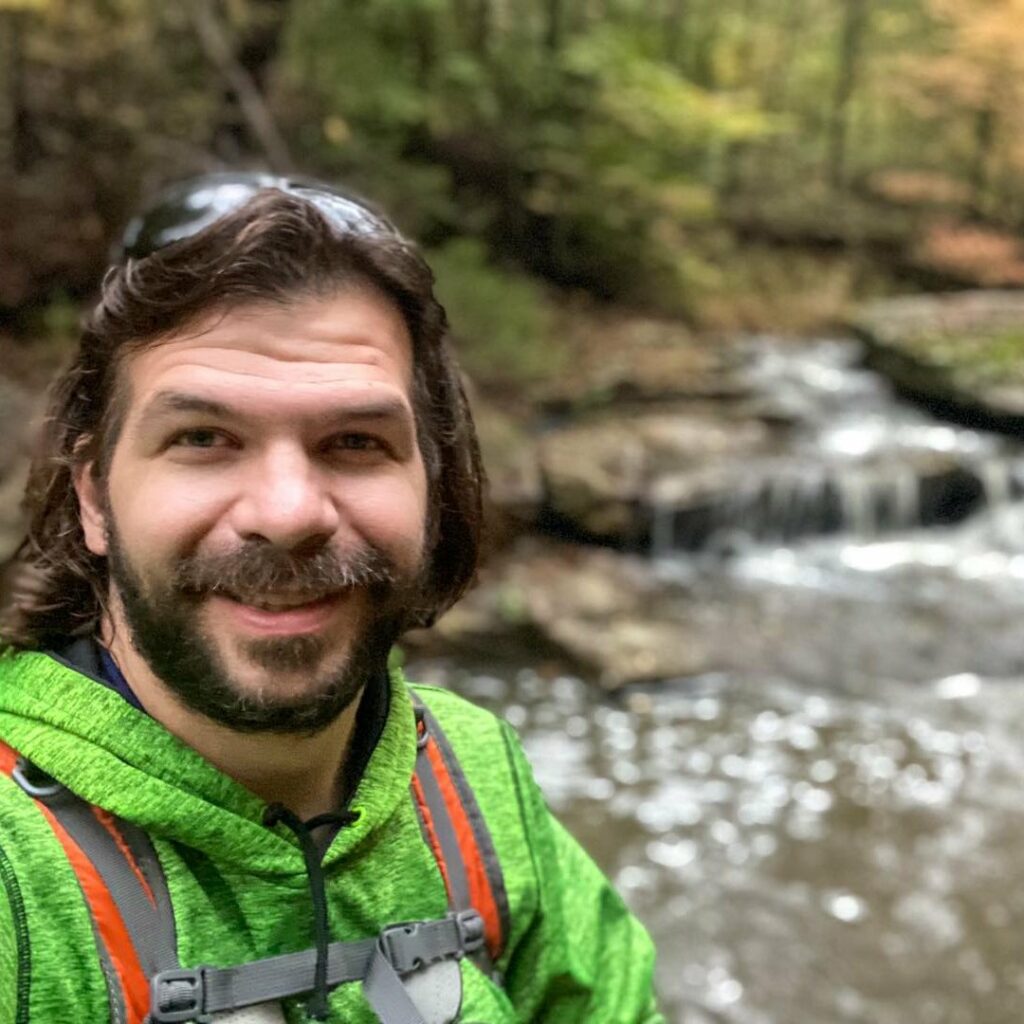
Shawn Gossman
Founder, Hiking with Shawn
Shawn Gossman, known regionally as Hiking with Shawn, is the founder and senior editor of this blog. Shawn has been hiking the Shawnee National Forest for over 15 years. Shawn is a Southern Illinois native and very active in the local tourism community. Learn more about Shawn here.