
How to Hike Rugged and Hilly Terrain with Ease

Are you trying to figure out how to hike rugged and hilly terrain without feeling like you’re dying after you’re done hiking?
There are easy trails, and then there are moderated and rugged trails. Harder trails are going to have rocky paths, roots, creek crossings, steep climbs, slick descents, and a lot of uneven terrain.
Hiking on moderate to rugged trails doesn’t have to be hard. It gets easier to hike rugged and hilly terrain when you’re going at the right pace, using proper hiking techniques, taking the right gear, and your mindset is right.
In this guide, I’ll show you how to hike rugged and hilly terrain with efficiency, so that you can reduce your hiking fatigue and feel more confident on harder trails.
What Makes Terrain “Rugged”?
Before you can hike rugged and hilly terrain, you need to understand what makes a trail rugged and hilly to begin with.
To classify a trail as rugged, you’re going to want to look for:
- Uneven trail surfaces
- Steep climbs and descents
- Loose rock and gravel
- Exposed roots
- Mud, slick leaves, or wet rock
- Creek crossings
- Narrow trail sections
- Constant elevation change
A hiking trail doesn’t have to be long to be tough. If a 1 miles trail has a lot of the elements above, it can wear you out faster than a flat 6-mile trail. It’s the elements and conditions that make a trail rugged, not the length.
Start With the Right Mindset to Hike Rugged and Hilly Terrain
In order to hike rugged and hilly terrain with ease, you need to start with the right mindset and thinking process.
Don’t assume a rugged hike is going to be like a paved walking path. You’re going to experience more obstacles than you do on any other trail. You’ll have to slow down a lot more on a rugged path.
You’ll have to steady your movement and give yourself more time to hike rugged and hilly terrain than what you’re used to.
You need to hike at a slower and controlled pace. The goal is to finish strong, not to rush your hike. This is the only way you’ll be safe and not result in you being injured on the trail.
Use Shorter Steps on Hills
The best way to hike up a steep hill is to slow down and take shorter steps.
If your step is big, you burn more energy. You’ll conserve your energy by taking short and steady steps. Try to focus on keeping your feet under your body rather than lunging them forward.
Taking short and steady steps is going to help you maintain a better balance. It will allow you to be safer on the trail. It will make hills a lot easier.
Keep your steps small and your progress as steady as possible.

Control Your Breathing
Believe it or not, getting control of how you breath can help you hike rugged and hilly terrain better.
Try to match your breathing to the pace of your hike. If you start to gasp for air, then you need to slow down. You might even need to stop and take a few moments to calm down and get your breathing in order.
Resting is important, but you should avoid sitting down too long, as it will tell your body you’re in rest mode and you’ll lose the energy to keep going.
Slow down while you hike, especially as you start to get into a hilly area.
Learn How to Climb More Efficiently
When you hike rugged and hilly terrain, you should focus on being more efficient as you climb up a hill.
Lean forward a little bit. Do this from your ankles rather than your waist. Keep your chest open so that you can breathe as you climb.
Don’t pull yourself up a hill with your back. That will only make you sore and miserable for the rest of the hike. Utilize your glutes and legs because those are the strongest parts of your body to get you up that hill.
Watch where you step as you hike uphill and try to step onto stable surfaces when possible.
Don’t rush up steep climbs on a hike. You’ll deplete all of your energy. It could even make the rest of your hike miserable and painful.
On longer climbs, use a “rest step” by briefly pausing your weight over each foot before the next step.
Descend With Control
Going downhill can often be harder than going uphill on a hike.
Downhill sections are a lot harder on your knees than climbing is. You usually put a lot more weight on your trees carefully trying to go downhill. Knee and leg strength is essential.
Try to take smaller steps when going downhill and slightly bend your knees to help save them.
Don’t lean forward too far. Don’t lean back too far either. Try to equal it out until you feel comfortable and there is less stress on you.
Be careful when the ground below you is wet, muddy, rocky, or full of leaves, as the surface could be very slick.
Use switchbacks instead of cutting straight down. Switchbacks will make hiking easier even if it means a few extra feet of hiking.
Use Trekking Poles to Hike Rugged and Hilly Terrain
Trekking poles are not for everyone, but many people swear by them when they’re hiking.
Trekking poles can do many things for you in terms of how you are able to hike rugged and hilly terrain. Trekking poles help with your balance, creek crossings, and rocky trails. They especially help you get up and down hills.
Trekking poles can benefit your knees by helping you take stress off of them when you’re going up and especially down a hill.
Get telescopic trekking poles in your cart. This lets you adjust the poles to your height and needed length. This will help you hike more comfortable and have a better-fitting pole.
Even one pole or hiking stick can help a lot of hikers who need something to help them balance more easily.
Pick the Right Footwear to Hike Rugged and Hilly Terrain
Wear appropriate shoes or boots if you plan to hike on rugged and hilly trails.
The shoes or boots should be made for hiking or at least outdoor use. The traction and comfort are the most important features you should be looking at. Shoes or boots need to have a good grip as you hike rugged and hilly terrain.
Make sure your shoes or boots are comfortable, fit well, and do side-to-side and front-to-back.
You might want to go with hiking boots. You might even settle for hiking shoes. Many hikers in this day and age (me included) would prefer to hike in trail running shoes because of the added comfort and lightweight of the shoes.
Boots may help if you prefer ankle support or carry a heavier pack for backpacking or something like that.
Replace your shoes or boots as needed and don’t hike in them if they’re falling apart.
Keep Your Pack Light
The lighter your pack, the easier it will be to hike rugged and hilly terrain.
A heavy pack will always make hills harder to hike. There is so much weight on your back, knees, and legs. A heavy pack can really make your balance uneven, too.
You should definitely carry the essential gear you need to bring with you but consider leaving extras and unnecessary gear at home.
Pack the important things. Pack plenty of water and plenty of snacks. Then add first aid, navigation, weather layers, a headlamp, and some emergency gear.
Make sure you pack your backpack the right way so that stuff is balanced, and it doesn’t feel weird on your back as you move.
Make sure you’re using an actual backpack meant for hiking. A school bookbag is not appropriate for hiking and will only cause pain and problems.
Fuel and Hydrate Before You Crash
Rugged and hillier hikes get so much easier when you hydrate and fuel before you start to crash or bonk out.
You’re going to burn a lot of energy when you hike rugged and hilly terrain. Hydration is important and so is fueling. Otherwise, once you spend your energy, everything is going to get harder and harder each step you take.
Eat a snack every 15 to 30 minutes to keep yourself fueled up and energized for the hike.
Never wait until you’re thirsty. You should be drinking your water consistently every 15 to 30 minutes depending on the temperature. Try to bring electrolytes for your water so that you can replace sodium since you’ll sweat it out.
Do not wait until you feel weak to start fueling and hydrating; otherwise, it will be too late and hard to recover from.
Train to Hike Rugged and Hilly Terrain
The best way to hike rugged and hilly terrain with ease is to be prepared for it through training.
Try to walk hills on a regular basis, whether they’re on the hiking trail or the sidewalk. Take the stairs instead of the elevators. Get on a treadmill and do incline workouts.
Practice step-ups, lunges, squats, and calf raises to help strengthen your feet, ankles, legs, and glutes.
You should also work out your core and upper body. This will help improve your balance. It also helps you wear and backpack better.
Start with shorter rugged trails and get really good at hiking them before attempting longer ones.
Know When to Turn Around
It can take much longer to hike rugged and hilly terrain, and it also takes more energy out of you.
It’s important to know when to turn around. If the weather changes, you start to get fatigued, or you’re losing daylight, then it’s time to turn around. The worst thing you can do is just keep pushing and get yourself into an unwanted situation.
Don’t let pride make your decisions for you because you can always come back and defeat the trail at a later date when you’re more prepared.
Beginner-Friendly Rugged Hiking Tips
If you’re a beginner and you want to hike rugged and hilly terrain with ease, I recommend taking advantage of the following tips:
- Start with shorter hilly trails. Get used to them before moving to longer trails.
- Hike with someone experienced if possible. They can offer you tons of advice.
- Avoid wet or icy conditions at first. This is only going to make it 10 times harder.
- Use a map or GPS app. The last thing you want is to get lost on a harder trail.
- Let someone know where you are going. Just in case you get lost and need help.
- Build confidence one hike at a time. Just focus on finishing each hike feeling good.
Common Mistakes to Avoid
Try to avoid these common mistakes so that you can hike rugged and hilly terrain without any added issues.
- Starting too fast. You’ll deplete your energy quickly.
- Wearing poor footwear. You’ll get blisters during your hike.
- Carrying too much weight. You’ll start feeling it quickly.
- Not bringing enough water. Dehydration can put you in the hospital.
- Ignoring weather conditions. Don’t get caught out in a bad storm.
- Taking big downhill steps. This will lead you to fall.
- Hiking rugged trails when already exhausted. It won’t get easier.
- Underestimating short but steep trails. It’ll wear you down fast.
Hiking with Shawn’s Final Thoughts
Rugged and hilly terrain gets easier with practice.
The key is steady pacing, good foot placement, smart breaks, and proper gear. Do not measure success by speed. Measure it by confidence, safety, and enjoying the trail.
Every hill you hike makes the next one a little easier.
If you’ve enjoyed this article, please consider leaving me a small one-time tip for writing it, or you can become a Monthly Patreon Supporter and get even more from me.
Subscribe to my free monthly newsletter for more hiking tips, gear reviews, and local events around Southern Illinois that you might enjoy.
Join The Hiking Forum, a free online community that we’re discussing hiking and backpacking on a daily basis with folks from all over the world.
And until next time, I’ll see you on the trail.
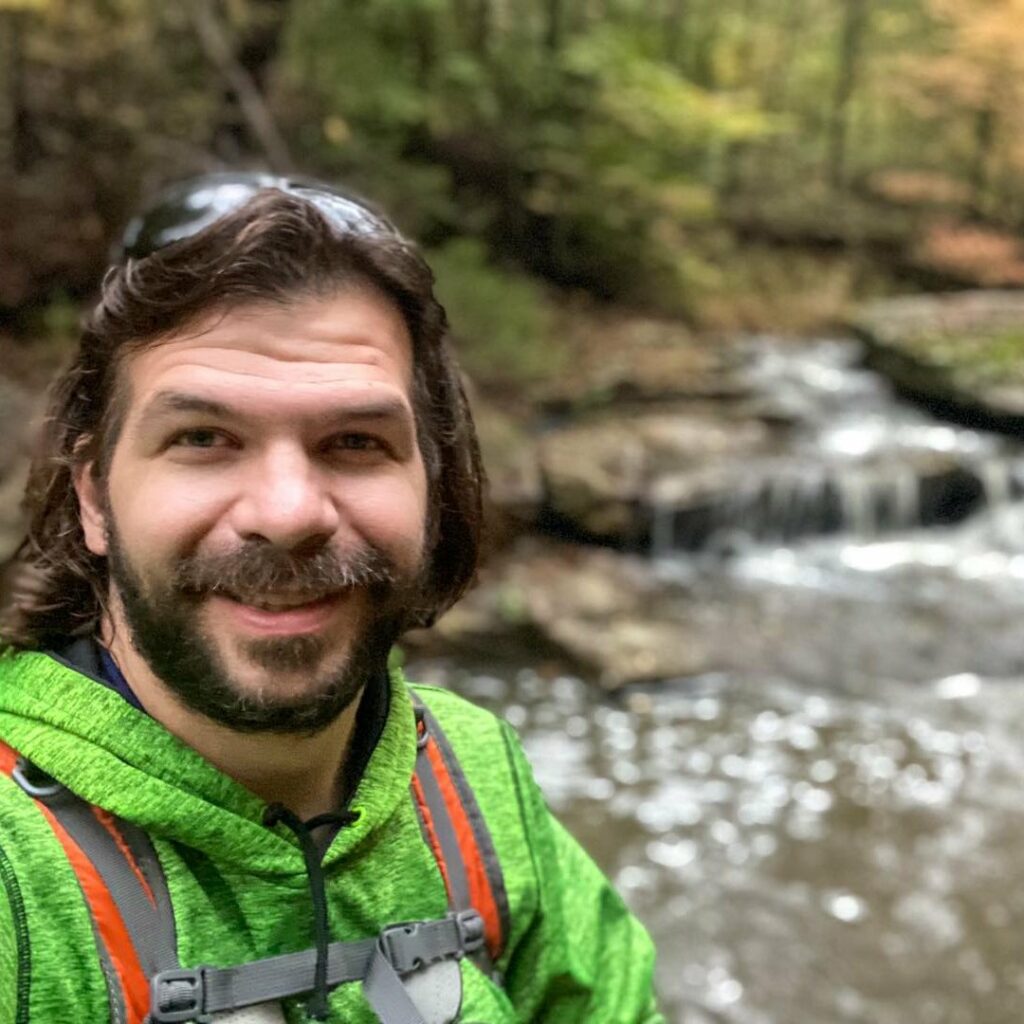
Shawn Gossman
Founder, Hiking with Shawn
Shawn Gossman, known regionally as Hiking with Shawn, is the founder and senior editor of this blog. Shawn has been hiking the Shawnee National Forest for over 15 years. Shawn is a Southern Illinois native and very active in the local tourism community. Learn more about Shawn here.